
beginner kettlebell workout pdf
Beginner Kettlebell Workout PDF: A Comprehensive Guide
This comprehensive guide offers a structured four-week program‚ perfect for beginners‚ utilizing kettlebells to build strength and endurance at home or in the gym.
It simplifies fitness journeys with efficient‚ full-body workouts‚ including exercises like goblet squats and Romanian deadlifts‚ all detailed in a downloadable PDF.
Explore a 30-minute routine‚ learn proper form‚ and avoid common mistakes‚ making this PDF your essential resource for a safe and effective kettlebell experience.
What is a Kettlebell and Why Use One?
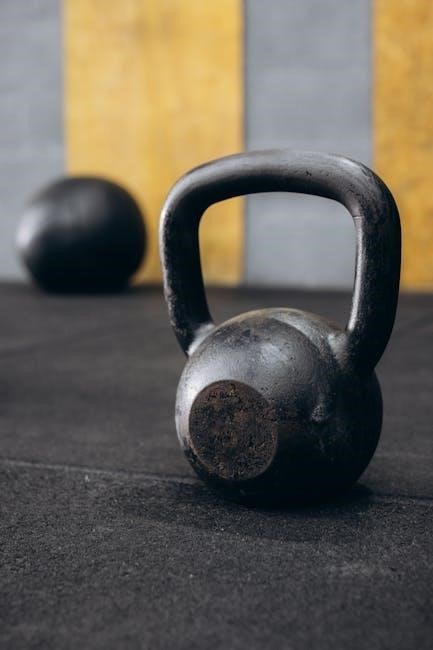
Kettlebells‚ distinct from dumbbells‚ are cast-iron or steel weights resembling a cannonball with a handle – their off-center weight is key! This unique design challenges your stability and engages more muscles during each exercise‚ offering a more holistic workout.
Unlike traditional weights‚ kettlebells facilitate dynamic movements like swings‚ snatches‚ and cleans‚ promoting functional strength applicable to everyday activities. They aren’t just about building muscle; they enhance cardiovascular fitness‚ improve coordination‚ and boost power.
For beginners‚ kettlebells are incredibly versatile; You need only one piece of equipment for a full-body workout‚ making them space-efficient and cost-effective. They’re ideal for building a foundation of strength‚ improving posture‚ and increasing overall fitness levels‚ all detailed within this PDF guide.

The dynamic nature of kettlebell training also burns a significant number of calories‚ aiding in weight management and improving metabolic conditioning.
Benefits of Kettlebell Training for Beginners
Kettlebell training offers a wealth of benefits‚ particularly for those new to fitness. It’s a highly efficient workout‚ engaging multiple muscle groups simultaneously – building both strength and endurance with each movement. This makes it a fantastic full-body solution‚ detailed in this beginner PDF.
Beyond strength‚ kettlebells improve cardiovascular health due to the dynamic nature of the exercises. The constant shifting of weight challenges your core‚ enhancing stability and improving posture. This translates to better balance and reduced risk of injury.
This type of training isn’t just about physical gains; it also boosts mental fortitude. Mastering kettlebell movements requires focus and coordination‚ improving cognitive function. The program within this PDF is designed to build confidence and empower you on your fitness journey.
Furthermore‚ kettlebell workouts are scalable‚ adapting to your fitness level as you progress.
Choosing the Right Kettlebell Weight
Selecting the appropriate kettlebell weight is crucial for beginners to ensure proper form and prevent injuries‚ as detailed in this beginner PDF. Starting too heavy can compromise technique‚ while too light may not provide sufficient challenge;
For women new to kettlebell training‚ an 8kg (18lbs) or 12kg (26lbs) weight is often recommended. Men typically begin with 12kg (26lbs) or 16kg (35lbs). However‚ these are just guidelines; individual strength levels vary.
A good starting point is to be able to comfortably perform 10-12 repetitions of a kettlebell swing with good form. If you struggle‚ reduce the weight. Prioritize mastering the movement pattern before increasing the load. This PDF provides guidance on proper technique.
Don’t be afraid to experiment and adjust as you progress. Having a range of weights available allows for continued challenge and growth.
Essential Kettlebell Exercises for Beginners
This beginner kettlebell workout PDF focuses on foundational movements to build strength and coordination. Four key exercises form the core of the program: Kettlebell Swings‚ Goblet Squats‚ Romanian Deadlifts (RDLs)‚ and Kettlebell Rows.
Kettlebell Swings are the cornerstone‚ developing explosive power and engaging the posterior chain. Goblet Squats build lower body strength and improve squat form. RDLs target hamstrings and glutes‚ enhancing hip hinge mechanics.
Kettlebell Rows strengthen the back muscles‚ promoting good posture. This PDF provides detailed instructions and visual aids for each exercise‚ emphasizing proper technique to maximize benefits and minimize risk of injury. Mastering these movements is vital before progressing.
These exercises‚ when performed correctly‚ create a full-body workout suitable for all fitness levels.
Kettlebell Swings: The Foundation
Kettlebell Swings are considered the foundational exercise in most beginner kettlebell workout PDFs due to their full-body engagement and dynamic movement. They’re a high-intensity‚ low-impact exercise that builds explosive power‚ strengthens the posterior chain – glutes‚ hamstrings‚ and back – and improves cardiovascular fitness.
Proper form is crucial. The swing isn’t an arm raise‚ but a hip hinge driven by powerful glute and hamstring activation. The PDF will detail starting with a light weight‚ focusing on mastering the hip hinge before increasing the load.
Beginners should prioritize technique over speed‚ ensuring a flat back and controlled movement. This exercise builds a solid base for more advanced kettlebell exercises.
Goblet Squats: Building Lower Body Strength
Goblet Squats are a fantastic entry point for beginners in a kettlebell workout PDF‚ focusing on building lower body strength and proper squatting mechanics. Holding the kettlebell close to your chest – the “goblet” position – encourages a more upright torso‚ promoting better form and engaging your core.
This variation is excellent for those new to squatting‚ as it provides a counterbalance and helps maintain a neutral spine. The PDF will guide you through maintaining a straight back‚ pushing your hips back‚ and keeping your weight in your heels.

Goblet Squats effectively target quads‚ glutes‚ and core‚ laying a strong foundation for more complex lower body exercises.
Romanian Deadlifts (RDLs): Hamstring and Glute Focus
Romanian Deadlifts (RDLs)‚ detailed in your beginner kettlebell workout PDF‚ are crucial for developing hamstring and glute strength. Unlike traditional deadlifts‚ RDLs emphasize a hip hinge movement‚ keeping your back straight and the kettlebell close to your legs.
This exercise builds posterior chain strength – the muscles on the back of your body – which is vital for athletic performance and everyday movements. The PDF will illustrate maintaining a slight bend in your knees and lowering the kettlebell by pushing your hips back.
Focus on feeling the stretch in your hamstrings as you lower the weight‚ and squeeze your glutes as you return to the starting position. RDLs improve posture and reduce the risk of lower back pain.
Kettlebell Rows: Strengthening the Back
Kettlebell Rows‚ a key component of your beginner kettlebell workout PDF‚ are excellent for building upper back strength and improving posture. This exercise targets the lats‚ rhomboids‚ and traps‚ counteracting the effects of prolonged sitting and promoting a balanced physique.
The PDF will demonstrate proper form: hinge at the hips‚ keeping your back flat‚ and pull the kettlebell towards your chest‚ squeezing your shoulder blades together. Maintain a controlled movement throughout the exercise‚ avoiding any jerking or swinging.

Kettlebell rows enhance core stability and contribute to overall functional strength. They are a fantastic addition to any fitness routine‚ especially for beginners seeking to build a strong and resilient back.
Warm-up Routine Before Your Workout
Before diving into your beginner kettlebell workout PDF‚ a dynamic warm-up is crucial to prepare your muscles and joints for the demands ahead. This minimizes injury risk and maximizes performance. The PDF will guide you through a sequence of movements designed to increase blood flow and range of motion.
Expect exercises like arm circles‚ leg swings‚ torso twists‚ and bodyweight squats. Incorporate light cardio‚ such as jogging in place or jumping jacks‚ for approximately five to ten minutes. Focus on movements that mimic the exercises in your workout‚ priming your body for success.
A proper warm-up enhances muscle elasticity and nervous system activation‚ ensuring you get the most out of each kettlebell swing and squat. Don’t skip this vital step!
Cool-down and Stretching

Following your beginner kettlebell workout PDF‚ a dedicated cool-down and stretching session is essential for recovery and flexibility. This helps to gradually lower your heart rate and reduce muscle soreness. The PDF will detail specific stretches targeting the muscles worked during your session.
Include static stretches‚ holding each for 20-30 seconds‚ focusing on your hamstrings‚ glutes‚ back‚ and shoulders. Gentle movements like cat-cow stretches and child’s pose can also promote relaxation and improve spinal mobility.
Prioritizing a cool-down prevents stiffness and aids in muscle repair. Remember‚ consistent stretching enhances your range of motion and contributes to long-term fitness gains. Don’t underestimate the power of a proper cool-down!
4-Week Beginner Kettlebell Program
This beginner kettlebell workout PDF features a progressive 4-week program designed to build a solid foundation. Week 1 introduces basic movements‚ focusing on proper form and technique with lighter weights. Week 2 increases repetitions and sets‚ challenging your muscular endurance.
Week 3 adds complexity through variations of core exercises‚ preparing you for more advanced movements. Finally‚ Week 4 concentrates on building endurance and power‚ integrating more dynamic exercises. Each week’s plan is clearly outlined in the PDF.
The program emphasizes gradual progression‚ ensuring you safely adapt to kettlebell training. Remember to listen to your body and adjust the intensity as needed. Consistency is key to achieving results!
Week 1 of this beginner kettlebell workout PDF focuses on mastering fundamental movements. Prioritize form over weight‚ utilizing a lighter kettlebell to establish correct technique. This week introduces the kettlebell swing‚ goblet squat‚ and kettlebell row – foundational exercises for building strength and coordination.
Each workout should begin with a thorough warm-up and end with static stretching. Perform 2-3 sets of 8-12 repetitions for each exercise‚ focusing on controlled movements. The PDF provides detailed instructions and visual aids for each exercise.
The goal is to familiarize yourself with the kettlebell and build a neuromuscular connection. Don’t rush the process; quality over quantity is crucial during this introductory phase.
Week 2: Increasing Repetitions and Sets
Building upon Week 1‚ this week’s beginner kettlebell workout PDF emphasizes progressive overload. Gradually increase the number of repetitions and sets for each exercise‚ while maintaining proper form. Aim for 3-4 sets of 10-15 repetitions for exercises like kettlebell swings‚ goblet squats‚ and Romanian deadlifts.
If you feel comfortable‚ consider slightly increasing the kettlebell weight‚ but only if your technique remains flawless. Continue prioritizing controlled movements and engaging your core throughout each exercise. The PDF provides guidance on recognizing when to increase weight.

Focus on establishing a consistent workout routine and listening to your body. Rest and recovery are vital for muscle adaptation and preventing injuries.
Week 3: Adding Complexity and Variations
This week’s beginner kettlebell workout PDF introduces subtle variations to challenge your muscles in new ways. Explore modifications to exercises like adding a pause at the bottom of your goblet squat or performing kettlebell rows with a slightly wider stance.
Consider incorporating unilateral movements – exercises performed on one side at a time – to improve balance and core stability. The PDF details safe progressions for these variations. Maintain focus on form; complexity shouldn’t compromise technique.
Continue with 3-4 sets‚ adjusting repetitions based on the difficulty of the new variations. Remember to prioritize controlled movements and listen to your body‚ adjusting the program as needed.
Week 4: Building Endurance and Power
This final week of the beginner kettlebell workout PDF focuses on consolidating gains and boosting both muscular endurance and explosive power. Increase the repetitions slightly‚ aiming for 12-15 reps per set for most exercises‚ while maintaining excellent form.
Introduce shorter rest periods between sets – around 45-60 seconds – to challenge your cardiovascular system and build stamina. The PDF suggests incorporating dynamic movements like faster kettlebell swings‚ focusing on generating power from your hips.
Continue with 3-4 sets‚ and remember to prioritize quality over quantity. This week is about refining technique and pushing your limits safely‚ preparing you for more advanced kettlebell training.
Sample Beginner Kettlebell Workout (30 Minutes)
This 30-minute beginner kettlebell workout‚ detailed in the PDF‚ is designed for full-body engagement. Begin with a 5-minute warm-up. Then‚ perform 3 sets of the following exercises:
- Double Kettlebell Goblet Squats – 12 repetitions.
- Double Kettlebell Romanian Deadlifts – 10 repetitions.
- Kettlebell Rows – 10 repetitions per side.
- Kettlebell Swings – 15 repetitions.
Rest for 60-90 seconds between sets. Focus on controlled movements and proper form throughout. This workout efficiently targets major muscle groups‚ building strength and endurance. Remember to consult the PDF for visual demonstrations and modifications. Finish with a 5-minute cool-down and stretching routine.
Proper Form and Technique: Avoiding Injuries
Maintaining proper form is paramount when starting with kettlebells‚ as detailed in the PDF. Beginners often wince at the complexity‚ but mastering technique prevents injuries and maximizes results; Focus on a neutral spine‚ engaging your core throughout each exercise.
Avoid rounding your back during swings and deadlifts. Keep your chest up and shoulders back. For squats‚ ensure your knees track over your toes. The PDF provides visual guides and cues for each movement.
Start with lighter weights to perfect your form before increasing the load. Prioritize controlled movements over speed. If you experience any pain‚ stop immediately and consult a qualified instructor.
Common Mistakes to Avoid
The beginner kettlebell workout PDF highlights several frequent errors. A common mistake is using momentum instead of muscle power‚ particularly during swings – focus on a hip hinge‚ not arm lifting. Rounding the back during Romanian Deadlifts is another prevalent issue; maintain a neutral spine.
Beginners often select a weight that’s too heavy‚ compromising form and increasing injury risk. Avoid this by starting light. Another error is improper grip; ensure a firm‚ but not overly tight‚ hold.
Failing to engage the core throughout exercises diminishes effectiveness and stability. The PDF emphasizes mindful movement and provides cues to correct these common pitfalls‚ ensuring a safe and productive workout.

Kettlebell Workout Safety Guidelines
The beginner kettlebell workout PDF prioritizes safety. Always warm up thoroughly before each session‚ preparing muscles for exertion. Ensure ample space‚ free from obstructions‚ to prevent accidents during swings and other dynamic movements.
Proper form is paramount; prioritize technique over weight. If you’re unsure‚ consult the PDF’s instructional videos or seek guidance from a qualified instructor. Listen to your body – stop immediately if you experience pain.
Maintain a firm grip on the kettlebell throughout each exercise. Cool down and stretch post-workout to improve flexibility and reduce muscle soreness. This PDF emphasizes a cautious and informed approach to kettlebell training.
Progression and Next Steps
Following the beginner kettlebell workout PDF‚ gradual progression is key. Increase repetitions and sets incrementally‚ focusing on maintaining perfect form. Once comfortable‚ explore variations of exercises detailed within the PDF‚ adding complexity to challenge your muscles further.
Consider increasing the kettlebell weight when exercises feel manageable. This PDF serves as a foundation; explore more advanced routines and flows as your strength and technique improve.
Don’t hesitate to seek guidance from a qualified instructor for personalized advice. Continuous learning and adaptation are vital for long-term success. Remember‚ consistency and mindful progression are the cornerstones of effective kettlebell training.
Resources for Further Learning (PDF Downloads)
Enhance your beginner kettlebell workout PDF journey with these supplementary resources. Several websites offer detailed PDF guides on kettlebell techniques‚ programming‚ and injury prevention. Look for materials from certified kettlebell instructors and reputable fitness organizations.
Explore PDFs focusing on kettlebell flows‚ advanced exercises‚ and specialized training programs. Many instructors provide downloadable workout plans and instructional videos. Remember to prioritize resources that emphasize proper form and safety.
Utilize online forums and communities dedicated to kettlebell training to connect with fellow enthusiasts and access valuable insights. These PDF downloads will accelerate your learning and help you maximize the benefits of your kettlebell workouts.
Kettlebell Workout Variations for Different Fitness Levels
Building upon your beginner kettlebell workout PDF‚ progression is key. For those with some experience‚ increase the kettlebell weight or add more challenging variations to exercises like swings and squats.
Intermediate users can incorporate more dynamic movements‚ such as cleans and snatches‚ while advanced individuals can explore complex flows and combinations. Adjusting the tempo – slowing down for increased time under tension‚ or speeding up for power – also modifies intensity.
Consider unilateral exercises (single-arm/leg) to address imbalances. Remember to prioritize form over weight‚ and gradually increase the difficulty as your strength and technique improve. These variations ensure continued progress and prevent plateaus.
Integrating Kettlebells into Your Existing Routine
Leveraging your beginner kettlebell workout PDF‚ seamlessly blend kettlebell training into your current fitness regimen. If you primarily focus on cardio‚ incorporate kettlebell swings or snatches as interval training bursts for enhanced calorie burn and power development.
For strength training enthusiasts‚ kettlebells offer a unique stimulus‚ complementing traditional weights. Substitute exercises like dumbbell rows with kettlebell rows‚ or add goblet squats to leg day.
Remember to strategically schedule kettlebell sessions to allow for adequate recovery. Start with one or two sessions per week‚ gradually increasing frequency as your body adapts. This integration maximizes benefits and prevents overtraining.
Finding a Qualified Kettlebell Instructor
While a beginner kettlebell workout PDF provides a solid foundation‚ personalized guidance from a certified instructor is invaluable. Look for instructors with recognized certifications from organizations like the American Kettlebell Club or StrongFirst‚ ensuring a deep understanding of proper technique and safety protocols.
A qualified instructor can assess your movement patterns‚ correct form flaws‚ and tailor a program to your specific needs and goals. They’ll also introduce progressive exercises beyond the PDF’s scope‚ accelerating your progress.

Consider group classes or one-on-one sessions. Observing experienced practitioners and receiving direct feedback minimizes injury risk and maximizes the effectiveness of your kettlebell training journey.