
sligh grandfather clock manual
Sligh Grandfather Clock Manual: A Comprehensive Guide
This manual provides a step-by-step guide for Sligh owners, covering identification, repair, maintenance, and valuable resources for preserving these timepieces.
Understanding Your Sligh Clock
Sligh grandfather clocks represent a legacy of American craftsmanship, demanding careful understanding for proper care. Identifying the movement – weight-driven or cable-driven – is crucial. Locating the movement area, often behind the clock face, reveals model numbers vital for parts sourcing and specific repair guidance.
These numbers unlock access to detailed information, aiding in troubleshooting and maintenance. Familiarizing yourself with your clock’s unique characteristics ensures its longevity and accurate timekeeping, preserving its value for generations.
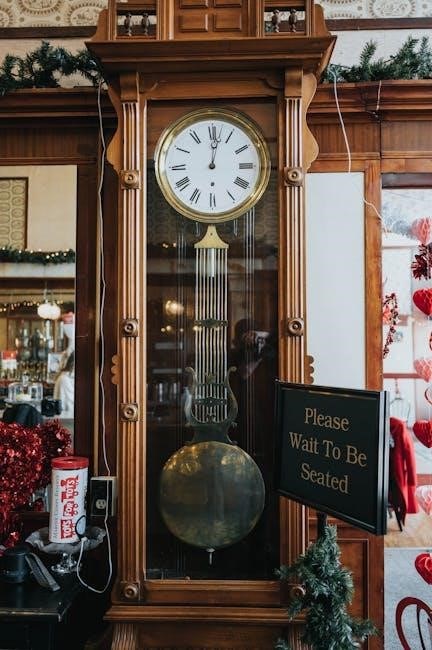
Identifying the Movement
Identifying your Sligh clock’s movement – whether weight-driven or cable-driven – is the first step towards successful repair and maintenance. Begin by locating the movement area, typically accessed by opening the glass case and carefully observing the internal mechanism.
Look for stamped model numbers; these are key to finding specific repair manuals and compatible parts. Understanding the movement type dictates the appropriate lubrication and adjustment techniques, ensuring accurate timekeeping and chime functionality.
Locating the Movement Area
Locating the movement requires careful access. Gently open the glass case of your Sligh clock. The movement, the clock’s engine, is usually housed within the wooden case, behind the clock face.
You’ll typically find it secured to the back or side walls. Observe the arrangement of gears, weights, or cables. Take note of its position before any disassembly; photographs can be incredibly helpful during reassembly. Proceed cautiously to avoid disturbing delicate components.
Decoding Model Numbers
Sligh clock model numbers are crucial for identifying specific parts and understanding your clock’s features. These numbers are typically located on a metal plate affixed to the movement or inside the case.
Decoding these numbers can reveal the year of manufacture, style, and movement type. Referencing Sligh catalogs or online resources dedicated to Sligh clocks can help decipher the code, aiding in accurate repair and part sourcing.
Essential Tools for Sligh Clock Repair
Successful Sligh clock repair requires a selection of specialized tools. Beyond basic screwdrivers and pliers, a mainspring winder, pivot burnisher, and staking set are invaluable. A good quality oiler, along with cleaning solutions designed for clocks, is also essential.
Magnifying glasses and soft cloths are vital for delicate work. Investing in these tools ensures safe and effective maintenance, preventing damage to intricate clock components.
Basic Hand Tools
For initial Sligh clock repair, a set of precision screwdrivers – both flathead and Phillips – is crucial. Needle-nose pliers are helpful for manipulating small parts, while a soft-faced hammer assists with gentle adjustments. A good quality wrench set, covering various sizes, is also necessary.
Don’t forget a magnifying glass for detailed inspection and a clean workspace with adequate lighting to prevent accidental damage during disassembly and reassembly.
Specialized Clock Tools
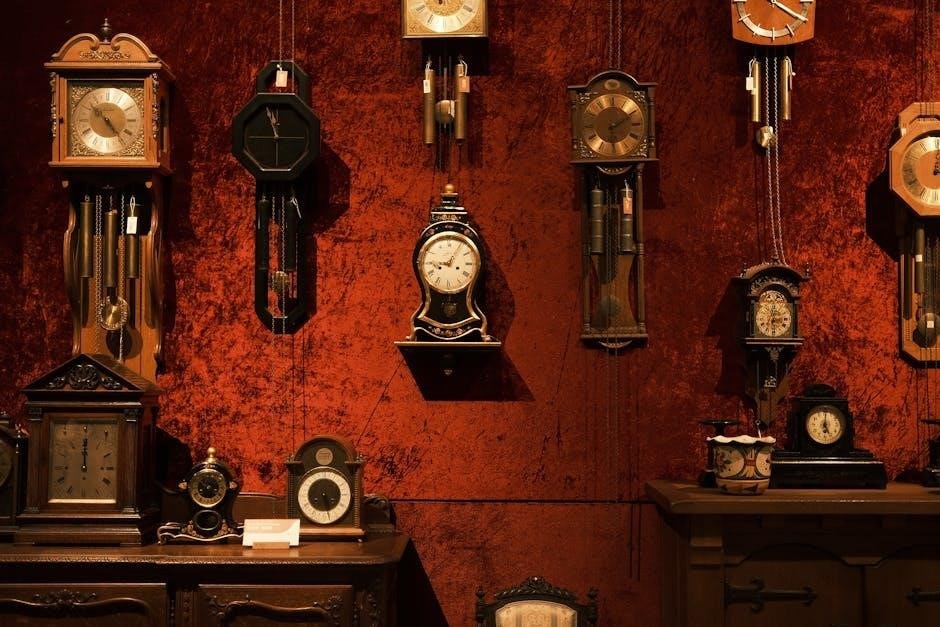
Beyond basic tools, a mainspring winder is essential for safely handling mainsprings during movement service. A pivot burnisher restores worn pivot points, ensuring smooth gear operation. Clock oilers precisely apply lubricant to critical areas, preventing wear. A staking set secures components during pin removal or installation.
A movement holder stabilizes the clock mechanism, and a demagnetizer eliminates unwanted magnetism affecting timekeeping. These specialized tools enhance precision and minimize damage.
Sligh Clock Movement Types
Sligh grandfather clocks primarily utilize two movement types: weight-driven and cable-driven. Weight-driven movements employ heavy weights suspended by cables, providing power through descent. These are traditional and often found in older models. Cable-driven movements use cables wound around barrels, offering a quieter operation and easier setup.
Understanding your clock’s movement is crucial for proper maintenance and repair, as each type requires specific handling and lubrication techniques.
Weight-Driven Movements
Weight-driven movements in Sligh clocks rely on the controlled descent of weights to power the timekeeping and chiming mechanisms. These weights, typically brass or iron, hang on cables or chains. As they descend, they release energy, turning gears and driving the hands.
Regular winding is essential, and the weight’s height directly correlates to the remaining run time. Inspect cables for wear and ensure smooth weight travel for optimal performance.
Cable-Driven Movements
Cable-driven movements, common in many Sligh grandfather clocks, utilize a system of cables to transmit power from the weights to the clock’s mechanism. These cables, often made of steel, wind around a drum as the weights descend, providing a consistent energy source.
Inspect cables regularly for fraying or damage, as breakage can halt the clock. Proper cable tension is crucial for accurate timekeeping and chiming functionality.
Disassembly and Inspection
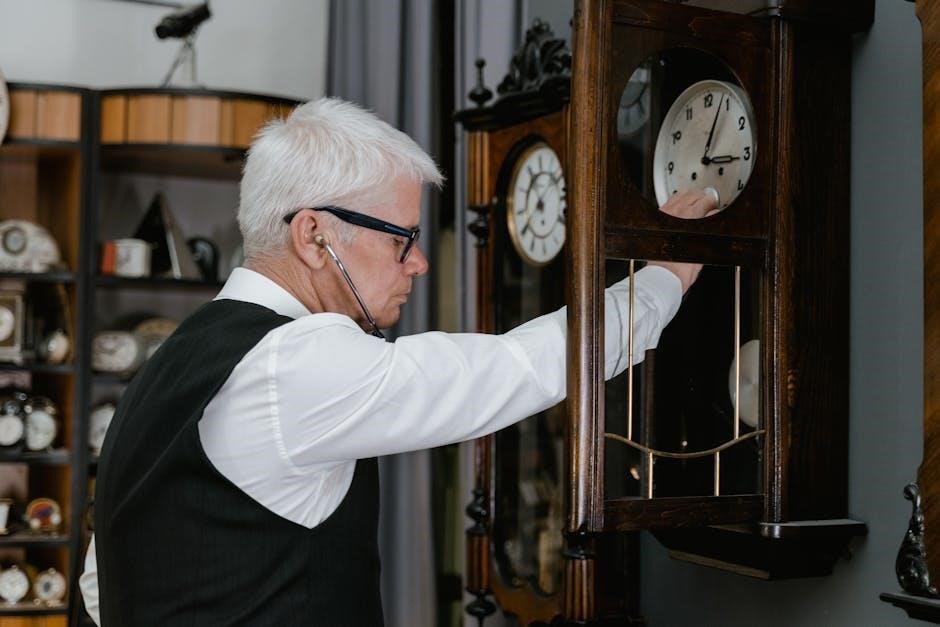
Disassembly should only be undertaken with careful consideration and a clear understanding of the clock’s mechanism. Begin by gently removing the clock face and hands, typically secured by a threaded collar – twist to loosen.
Thoroughly inspect all movement components for visible damage, wear, or broken parts. Document the process with photos to aid reassembly, noting the position of each part before removal.
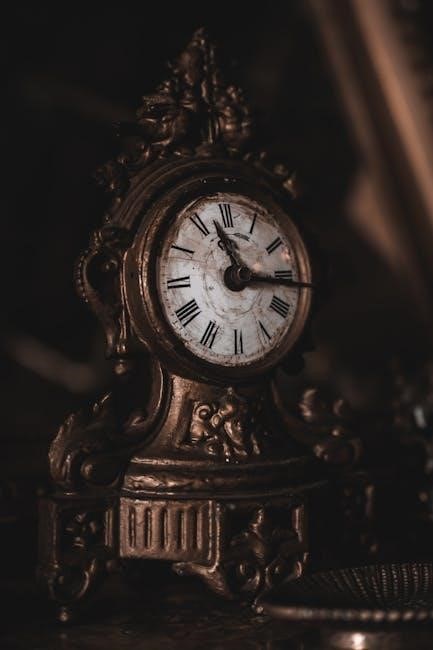
Removing the Clock Face and Hands
Carefully open the glass case to access the clock face. To remove the hands, locate the threaded collar securing them. Gently twist this collar counterclockwise to loosen it, allowing you to lift off both hands simultaneously.
Exercise caution to avoid bending the delicate hand arbors. Document the original hand positions for accurate reassembly later. A soft cloth can protect the dial during this process.
Inspecting the Movement for Damage
Thoroughly examine the clock movement for visible signs of wear, corrosion, or broken parts. Look closely at the gears, pivots, and suspension spring. Check for excessive play in the gear train or damage to the chime mechanism.
Note any bent or broken teeth on the gears, and inspect the pallets for wear. Document all findings with photographs before proceeding with any repairs or cleaning.
Cleaning and Lubrication
Proper cleaning and lubrication are vital for a Sligh clock’s longevity. Carefully remove dust and grime from all movement components using a soft brush and specialized clock cleaning solution. Avoid harsh chemicals!
Apply high-quality clock oil to pivots, gears, and other moving parts, following the manufacturer’s recommendations. Over-oiling can attract dust, so use sparingly. Regular lubrication ensures smooth operation and prevents wear.
Cleaning the Movement Components
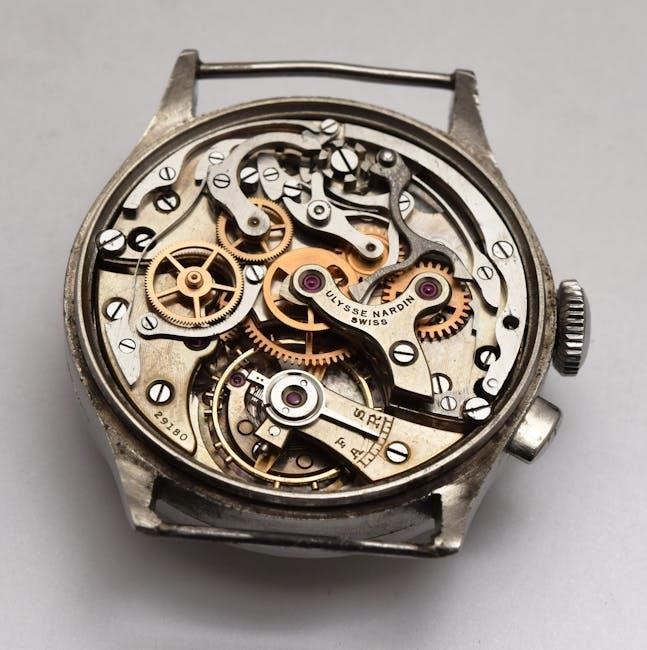
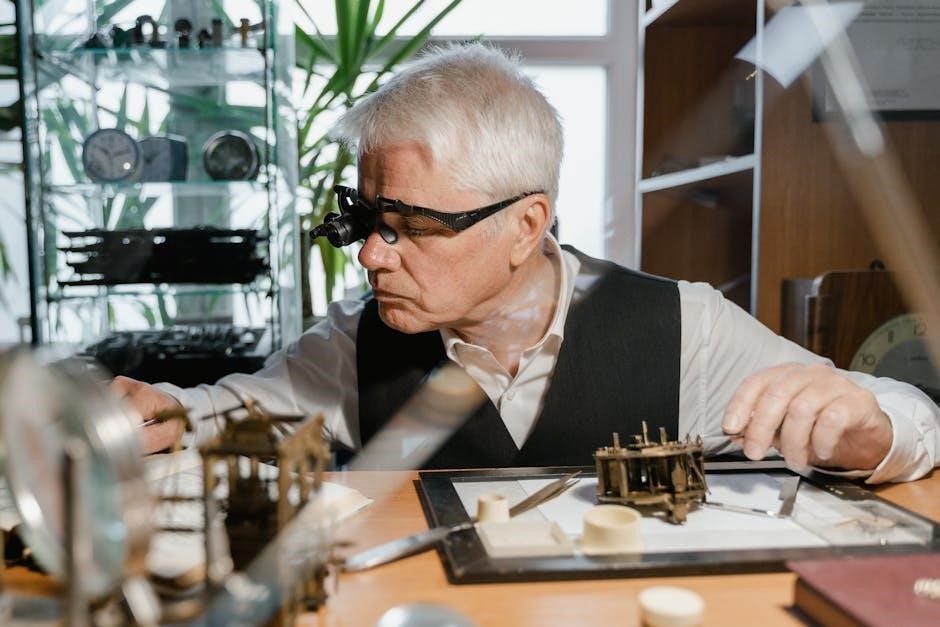
Begin by gently removing dust with a soft brush, focusing on pivots and gear teeth. Use a specialized clock cleaning solution – avoid household cleaners! Apply it with a fine brush or lint-free cloth, carefully cleaning each component.
Ensure all solvent residue is removed before lubrication; Compressed air can assist in drying. Inspect parts closely for corrosion or damage during cleaning; address these issues promptly for optimal performance.
Choosing the Right Lubricants
Select lubricants specifically designed for clocks; avoid general-purpose oils. Use a high-quality clock oil for pivots, bearings, and gear teeth, ensuring smooth operation. Graphite powder is excellent for pendulum crutches and other friction points.
Apply lubricants sparingly – excess attracts dust. Different movement types may require specific oil viscosities; consult a repair manual for guidance. Proper lubrication extends the clock’s life and accuracy.
Repairing Common Sligh Clock Issues
Addressing common problems like timekeeping inaccuracies or chime malfunctions often involves careful inspection and adjustment. If the clock isn’t keeping time, check pendulum swing and weight alignment. For chime issues, examine the chime sequence and hammer strikes.
Professional assistance may be needed for complex repairs; however, many minor issues can be resolved with patience and the right tools.
Clock Not Keeping Time
If your Sligh clock loses or gains time, begin by ensuring the clock is level. A slight imbalance can significantly affect accuracy. Next, verify the pendulum swings freely with a consistent arc. Adjust weight height; raising weights generally speeds up time, lowering slows it down.
Inspect for obstructions hindering pendulum movement and ensure proper lubrication of key components.
Chimes Not Working
When the chimes cease functioning, first check if the chime hammer can move freely to strike the chime rods. Ensure nothing obstructs its path. Verify the chime train is engaged; some clocks have a silencing lever. Inspect the chime rods themselves for damage or misalignment.
Lubrication of the chime mechanism is crucial; a technician can assist if needed.
Adjusting the Chime Sequence
Understanding chime intervals is key to proper adjustment. Sligh clocks often offer options for Westminster, Whittington, or other chime patterns. The sequence is controlled by a cam system, typically adjustable via a small wheel or lever near the chime mechanism.
Setting the chime hammer strikes requires careful observation and minor adjustments to ensure accurate and pleasing chime melodies. Consult a technician if unsure.
Understanding Chime Intervals
Chime intervals dictate how frequently your Sligh clock announces the hour. Westminster chimes, for example, play a melody every fifteen minutes, with the full chime sequence occurring on the hour. Different Sligh models offer varying interval settings, impacting the overall chime experience.
Adjusting these intervals often involves manipulating levers or gears within the chime mechanism, requiring patience and a delicate touch to achieve the desired effect.
Setting the Chime Hammer Strikes
Adjusting chime hammer strikes controls which hammers activate during the hour count and chime sequence. Sligh clocks often feature levers or screws to modify strike patterns, allowing customization of the chime’s sound. Carefully observe the existing setup before making changes, noting hammer positions and lever settings.
Incorrect adjustments can lead to inaccurate timekeeping or dissonant chimes, so proceed cautiously and consult repair resources if needed.
Weight and Pendulum Adjustment
Proper weight and pendulum adjustment are crucial for accurate timekeeping in a Sligh grandfather clock. Adjusting weight height impacts the clock’s power reserve, while pendulum swing regulation controls the clock’s speed. Lowering weights provides less power, potentially stopping the clock.
Lengthening the pendulum increases speed, shortening it decreases speed. Small adjustments are key; observe changes over several hours for optimal performance.
Adjusting Weight Height
Weight height directly influences the power reserve of your Sligh grandfather clock. Lowering the weights reduces the duration the clock will run before needing rewinding, potentially causing it to stop mid-cycle. Conversely, raising them provides a longer run time.
Ensure weights hang freely and don’t obstruct each other. Consistent weight height is vital for reliable operation; avoid uneven adjustments.
Pendulum Swing Regulation
Regulating the pendulum controls the clock’s speed. To speed it up, lower the pendulum bob; to slow it down, raise it. Small adjustments are key – a quarter turn at a time is recommended. Observe the clock over several hours after each adjustment.
A wider swing arc generally equates to a faster rate, while a narrower arc slows it down. Patience and careful observation are crucial for accurate timekeeping.
Sligh Clock Maintenance Schedule
Regular maintenance ensures longevity. Dust your Sligh clock weekly with a soft cloth, avoiding abrasive cleaners. Annually, a more thorough inspection is vital. This includes checking for wear, cleaning movement components, and re-lubricating key areas.
Professional inspection every 3-5 years is recommended, especially for intricate mechanisms. Consistent care prevents minor issues from escalating into costly repairs, preserving your clock’s value.
Regular Dusting and Cleaning
Consistent dusting is paramount for Sligh clock preservation. Use a soft, lint-free cloth to gently remove dust weekly from the case, face, and pendulum. Avoid applying liquids directly to the wood; dampen the cloth lightly if needed.
Periodically, carefully vacuum the movement area with a brush attachment. This prevents dust buildup that can impede function. Gentle cleaning extends the clock’s life and maintains its beauty.
Annual Inspection and Lubrication
Schedule an annual, thorough inspection of your Sligh clock’s movement. A qualified technician should examine for wear, damage, and proper function. Lubrication is crucial; old oil thickens, hindering performance.
Specific clock oils are required – avoid household oils! Proper lubrication ensures smooth operation and prevents premature wear. This proactive maintenance safeguards your investment and keeps your clock accurately telling time for generations.
Troubleshooting Guide
If your Sligh clock stops suddenly, check the weights and pendulum – ensure they are properly positioned and swinging freely. Incorrect chime sounds often indicate a misalignment of the chime hammers or a problem within the chime sequence mechanism.
Consulting a technician is recommended for complex issues. Don’t attempt repairs beyond your skill level; improper handling can cause further damage. Regular maintenance can prevent many common problems.
Clock Stops Running Suddenly
When a Sligh grandfather clock ceases operation, the initial step involves verifying the weight positions; they may have descended too low. Next, confirm the pendulum is unobstructed and swinging with a consistent arc. A lack of lubrication or a dirty movement can also halt operation.
Ensure the clock is level; an uneven surface impacts pendulum swing. If issues persist, professional assessment is advised to prevent further complications.
Chimes Sound Incorrectly
If your Sligh clock’s chimes are off-key or the sequence is wrong, examine the chime rods for obstructions or misalignment. A technician can adjust the hammer strikes to ensure proper chime intervals and correct the sequence. Dust accumulation on the chime mechanism can also cause inaccuracies.
Verify the clock is level, as this impacts chime functionality. Professional help is recommended for complex chime adjustments.
Finding Sligh Clock Parts
Locating replacement parts for your Sligh clock can be challenging due to its age and specific mechanisms. Online retailers specializing in clock parts often carry common components. Antique clock part suppliers are invaluable for rarer or discontinued pieces.
Having the clock’s model number is crucial when searching. Be prepared to provide detailed descriptions or photos to ensure compatibility with the part you need.
Online Retailers
Several online retailers specialize in grandfather clock parts, offering a convenient way to source replacements. Websites like TimePartsUSA and Esslinger often stock common Sligh clock components, including weights, cables, and pendulum bobs.
Always verify the part’s compatibility with your specific Sligh model before purchasing. Detailed model numbers are essential for accurate searches and returns if needed.
Antique Clock Part Suppliers
For rarer or older Sligh clock parts, antique clock part suppliers are invaluable resources. Companies like National Association of Watch and Clock Collectors (NAWCC) offer access to extensive networks and specialized parts.
These suppliers often carry original components or expertly crafted reproductions. Be prepared to provide detailed information about your clock’s movement and model number for assistance.
Recommended Repair Manuals and Books
For Sligh clock owners tackling repairs, several manuals offer invaluable guidance. “The Grandfather Clock Owners Repair Manual” provides step-by-step instructions for various repairs, even for beginners.
Steven Conover’s “Chime Clock Repair” is also highly recommended, covering chime mechanisms extensively. While not specific to Sligh, the principles apply, aiding in diagnosis and restoration efforts.
“The Grandfather Clock Owners Repair Manual”
This manual excels at providing accessible repair guidance, even for those without prior experience. It breaks down complex procedures into manageable steps, accompanied by clear illustrations. Covering a broad range of issues, it’s a practical resource for diagnosing and fixing common problems in grandfather clocks, including many Sligh models.
It empowers owners to confidently address repairs themselves, saving on professional costs.

“Chime Clock Repair” by Steven Conover
Steven Conover’s book is a valuable resource, particularly for understanding the intricacies of chime mechanisms. While it may not detail every specific Sligh movement, it provides a strong foundation in chime clock theory and repair techniques. It covers a wide array of chime systems and troubleshooting methods.
Owners will find it helpful for diagnosing and resolving chime-related issues.
Professional Sligh Clock Repair Services
For complex repairs or when you lack confidence, seeking a qualified technician is crucial. Finding a specialist experienced with grandfather clocks, and ideally Sligh specifically, ensures proper diagnosis and restoration. Costs vary significantly based on the issue’s complexity and the technician’s rates.
Expect to receive a detailed estimate before any work begins, covering parts and labor.
Finding a Qualified Technician
Locating a skilled technician requires careful research. Begin by asking for recommendations from antique dealers, clock collectors, or online forums dedicated to grandfather clocks. Verify their experience specifically with Sligh movements and chime mechanisms.
Check online reviews and ensure they are licensed and insured. A reputable technician will gladly provide references and a clear estimate of repair costs.
Cost of Professional Repair
Professional Sligh clock repair costs vary significantly based on the issue’s complexity. Simple cleaning and lubrication might range from $150 to $300, while more extensive repairs, like movement overhaul or chime adjustments, can exceed $500.

Replacing damaged parts, especially unique Sligh components, adds to the expense. Always obtain a detailed written estimate before authorizing any work, clarifying labor rates and part costs.
Safety Precautions During Repair
Repairing a Sligh grandfather clock demands caution. Handle delicate components with care to avoid breakage or damage. Always support weights during removal and lowering to prevent injury or clock case damage.
Be mindful of the pendulum’s swing radius. Disconnect the power source if applicable. Wear safety glasses to protect your eyes. If unsure about any step, consult a qualified technician – safety is paramount!
Handling Delicate Components
Sligh clock movements contain fragile parts; exercise extreme care during disassembly. Avoid applying excessive force when removing hands, weights, or the pendulum. Use soft cloths or gloves to prevent scratches or fingerprints on polished surfaces.
Support components as you detach them. Organize parts systematically to ensure proper reassembly. If a part feels stuck, do not force it – seek expert advice. Gentle handling preserves functionality and value.
Working with Weights and Pendulums
Sligh grandfather clocks utilize substantial weights; handle them with caution to prevent injury or damage. Lower weights slowly and control their descent. Never allow weights to fall freely. The pendulum is also delicate; avoid bending or impacting it.
Ensure the pendulum is securely hung before releasing it. Always support weights during removal or adjustment. Proper handling safeguards both you and the clock’s intricate mechanisms.
Sligh Clock History and Value
The Sligh Company, founded in 1877, became renowned for quality grandfather clocks, blending traditional craftsmanship with innovative designs. Determining a Sligh clock’s value requires considering age, model, condition, and rarity. Originality significantly impacts worth.
Researching comparable sales and consulting antique appraisers provides accurate valuations. Well-maintained, historically significant Sligh clocks command higher prices in the collector’s market.
Brief History of the Sligh Company
Founded in 1877 by Lewis Sligh in Alliance, Ohio, the company initially produced oak furniture before focusing on grandfather clocks. Sligh became synonymous with quality, employing skilled artisans and innovative manufacturing techniques. They gained prominence during the Victorian era and continued through the 20th century.
Sligh adapted to changing tastes, offering diverse styles, but always maintained a commitment to craftsmanship. The company eventually faced challenges, but its legacy endures through the cherished clocks it produced.
Determining Your Clock’s Value
Assessing a Sligh clock’s value requires considering several factors. Age, model, condition, and rarity significantly impact price. Originality is key; modifications decrease value. Research comparable clocks sold at auction or through antique dealers. Online resources and appraisal services can provide estimates.
Movement type (weight-driven or cable-driven) also influences value. A well-maintained clock with a documented history will command a higher price than one needing extensive repair.
Resources for Sligh Clock Owners
Sligh clock owners benefit from numerous online and offline resources. Online forums and communities offer a platform for sharing knowledge and seeking advice from fellow enthusiasts. Sligh Clock Collector Groups provide specialized expertise and networking opportunities.
Furthermore, dedicated websites and antique clock retailers often host valuable information. Repair manuals and books, like “The Grandfather Clock Owners Repair Manual,” are essential for self-maintenance and understanding.
Online Forums and Communities
Online forums dedicated to antique clocks, and specifically Sligh clocks, are invaluable resources. These platforms allow owners to connect, share experiences, and troubleshoot issues collaboratively. Members often post detailed photos and ask specific questions regarding repair and maintenance.
Active communities provide a wealth of knowledge, offering solutions and guidance beyond what’s found in manuals. Searching online using keywords like “Sligh clock forum” will reveal several helpful groups.
Sligh Clock Collector Groups
Sligh clock collector groups, often found on social media platforms or as dedicated organizations, offer a focused community for enthusiasts. These groups frequently host discussions about clock history, restoration techniques, and identifying rare models.
Members often share valuable insights into Sligh’s manufacturing processes and can assist with determining a clock’s value. Connecting with fellow collectors provides access to specialized knowledge and potential parts sources.