
dexamethasone suppression test instructions pdf
Dexamethasone Suppression Test: A Comprehensive Guide
This guide details the dexamethasone suppression test, crucial for diagnosing Cushing’s syndrome, involving cortisol level monitoring after dexamethasone administration.
The Dexamethasone Suppression Test (DST) is a pivotal diagnostic tool utilized to evaluate the hypothalamic-pituitary-adrenal (HPA) axis function, specifically assessing for Cushing’s syndrome. This test hinges on the principle that administering dexamethasone, a potent synthetic glucocorticoid, should normally suppress cortisol production. A failure of cortisol levels to suppress indicates a disruption within the HPA axis, potentially stemming from a pituitary or adrenal tumor, or ectopic ACTH production.
Various DST protocols exist, including overnight, two-day low-dose, and high-dose versions, each with specific instructions and interpretations. Understanding these protocols, as detailed in available resources like laboratory guidelines and medical publications, is crucial for accurate diagnosis and patient management. Proper preparation and adherence to the testing procedure are paramount for reliable results.
Understanding Cushing’s Syndrome and Cortisol
Cushing’s syndrome arises from prolonged exposure to excessive cortisol, a vital hormone regulating metabolism, immune response, and stress. This overexposure can stem from the body’s own production, often due to pituitary or adrenal tumors, or from external sources like prolonged corticosteroid use. Symptoms range from weight gain and muscle weakness to hypertension and diabetes.
The DST assesses the body’s ability to regulate cortisol production. Normally, dexamethasone suppresses ACTH release, reducing cortisol. In Cushing’s, this suppression is impaired. Untreated, Cushing’s can lead to severe complications like heart attacks, strokes, and infections, highlighting the importance of accurate diagnosis via tests like the DST and prompt intervention.

Types of Dexamethasone Suppression Tests
Various DST protocols exist, including low-dose (overnight and two-day) and high-dose tests, each differing in dexamethasone dosage and blood collection timing.
Low-Dose Dexamethasone Suppression Test (LDDST)
The Low-Dose Dexamethasone Suppression Test (LDDST) is a common initial screening tool for Cushing’s syndrome, assessing the hypothalamic-pituitary-adrenal (HPA) axis’s feedback mechanism. It evaluates whether cortisol production is appropriately suppressed by dexamethasone, a synthetic glucocorticoid. Two primary LLDST protocols are utilized: the overnight and the two-day versions. The overnight test, favored for its convenience, involves a single 1mg dose of dexamethasone administered late in the evening, followed by a morning cortisol measurement.
The two-day protocol involves administering 0.5mg of dexamethasone every six hours for 48 hours, with cortisol levels measured at specific intervals. A failure to suppress cortisol levels suggests a potential issue within the HPA axis, prompting further investigation.
Overnight LLDST Protocol
The overnight low-dose dexamethasone suppression test (LLDST) is a widely used screening method due to its simplicity. Typically, no fasting is required prior to the test. A baseline blood sample for cortisol measurement may be collected around 9:00 AM, though it’s often optional. Crucially, 1 mg of dexamethasone is administered orally between 11:00 PM and midnight.
The following morning, usually around 8:00-9:00 AM, a second blood sample is drawn to measure cortisol levels; Normal individuals will exhibit suppressed cortisol levels, indicating proper HPA axis function. Elevated cortisol suggests a lack of suppression, warranting further diagnostic testing for Cushing’s syndrome.
Two-Day LLDST Protocol
The two-day low-dose dexamethasone suppression test (LLDST) provides a more detailed assessment than the overnight version. On Day 1, a baseline cortisol level is often collected around 9:00 AM. Subsequently, 2 mg of dexamethasone is administered orally every six hours for a total of eight doses over 48 hours.
Urine is collected for 24 hours during this period, specifically to measure cortisol excretion. Cortisol levels are then assessed. A normal response demonstrates suppression of cortisol in both blood and urine. Failure to suppress suggests potential Cushing’s syndrome, prompting further investigation with high-dose testing or other diagnostic procedures.
High-Dose Dexamethasone Suppression Test (HDDST)
The high-dose dexamethasone suppression test (HDDST) differentiates between various causes of Cushing’s syndrome. It’s employed when the low-dose test is inconclusive or suggests pituitary-dependent Cushing’s. Typically, 0.5mg of dexamethasone is administered orally every six hours for two days, totaling 2mg per day.
Serial blood samples are collected, usually at 8:00 AM on both days, to measure cortisol levels. A significant reduction in cortisol indicates pituitary origin, while a lack of suppression suggests adrenal tumors or ectopic ACTH production. This test helps pinpoint the source of excessive cortisol production for targeted treatment.
HDDST Protocol and Dosage
The standard HDDST protocol involves administering 0.5 mg of dexamethasone orally every six hours for 48 hours. This equates to a total daily dosage of 2 mg. Baseline cortisol levels are obtained before initiating dexamethasone administration, typically at 8:00 AM. Subsequent cortisol samples are then collected at regular intervals – usually every 24 hours – during the testing period.
Some protocols may utilize intravenous dexamethasone, adjusting the dosage accordingly. Careful monitoring is crucial, and adherence to the precise timing of both dexamethasone administration and blood sample collection is paramount for accurate interpretation of results.
Interpreting HDDST Results
In healthy individuals, the HDDST typically suppresses cortisol production, resulting in cortisol levels below a specified threshold – often 50 nmol/L. A failure to suppress cortisol levels indicates a potential issue with the hypothalamic-pituitary-adrenal (HPA) axis, suggestive of Cushing’s syndrome or ectopic ACTH production.
However, interpretation requires caution. Pseudo-Cushing’s states, like severe illness or depression, can also yield non-suppression. Further investigation, including CRH stimulation tests, is often necessary to differentiate true Cushing’s from these conditions. Results must always be evaluated in the context of the patient’s clinical presentation.

Preparing for the Dexamethasone Suppression Test
Proper preparation involves reviewing medications with your doctor and understanding pre-test instructions, potentially including specific timing for medication adjustments and sample collection.
Pre-Test Instructions for Patients
Before undergoing the dexamethasone suppression test, patients should carefully review all provided instructions. Typically, no specific fasting is required for the overnight test, though confirming this with your healthcare provider is essential. It’s crucial to inform your doctor about all medications, supplements, and herbal remedies you are currently taking, as some can interfere with test results.
Avoid strenuous exercise the day before and on the day of the test. Stress can also influence cortisol levels, so minimizing stress is advisable. Understand the timing of dexamethasone administration – usually around 11 PM to midnight – and blood sample collection times. If you experience any unusual symptoms after taking dexamethasone, contact your doctor immediately. Clear communication with your healthcare team ensures accurate results and a smooth testing process.
Medication Considerations Before the Test
Prior to the dexamethasone suppression test, meticulous medication review is paramount. Certain drugs can significantly impact cortisol levels and falsely alter test outcomes. Specifically, medications like estrogens, glucocorticoids (prednisone), and some antidepressants must be discussed with your physician. Your doctor will advise whether to temporarily discontinue these medications before the test, considering your individual health needs.
Even over-the-counter medications and herbal supplements should be disclosed. Some may contain compounds that interfere with cortisol metabolism. Accurate medication history allows for proper interpretation of results. Failure to report medications can lead to misdiagnosis. Always follow your doctor’s specific instructions regarding medication adjustments before the test.
Fasting Requirements (If Any)
Fasting requirements for the dexamethasone suppression test can vary depending on the specific protocol your physician employs. Generally, for the overnight low-dose test, fasting is not strictly required. However, some laboratories prefer patients to abstain from food and caffeine for at least 8-12 hours before the initial blood draw to minimize potential influences on cortisol levels.
The two-day low-dose test may also have similar recommendations. Always confirm with the ordering physician or the laboratory performing the test regarding specific fasting instructions. Consuming a standardized meal before the test isn’t typically necessary, but avoiding large meals immediately beforehand is advisable for accurate results.
The Testing Procedure: Step-by-Step
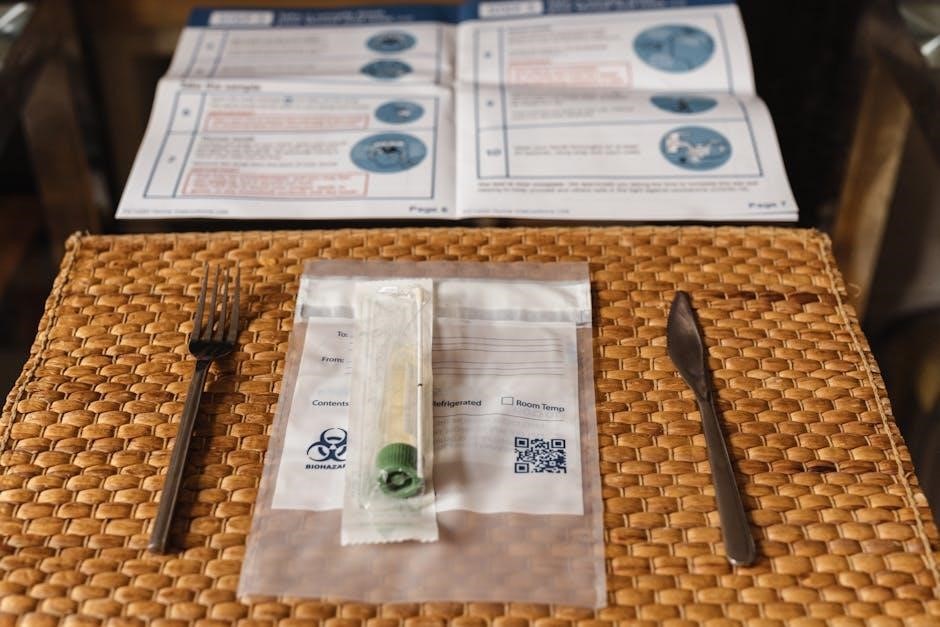
The test involves timed blood draws to measure cortisol, alongside dexamethasone administration—typically orally at 11 PM for overnight protocols, as outlined in PDFs.
Blood Sample Collection Times
Precise timing of blood draws is paramount for accurate DST results, as detailed in dexamethasone suppression test instructions PDFs. For the overnight test, a baseline cortisol sample is often collected at 8-9 AM. Subsequently, dexamethasone (typically 1 mg) is administered orally around 11 PM to 12 AM. The crucial follow-up cortisol sample is then drawn the following morning, usually between 8-9 AM, approximately 8-12 hours post-dexamethasone.
Two-day protocols involve more frequent collections: baseline, post-dexamethasone doses (often 0.5mg every six hours), and a final sample the next morning. These PDFs emphasize consistent timing to minimize variability and ensure reliable cortisol measurements, reflecting the body’s natural cortisol rhythm and suppression response.
Dexamethasone Administration Details
Dexamethasone administration specifics, outlined in dexamethasone suppression test instructions PDFs, are critical for test validity. Typically, for the overnight test, 1 mg of dexamethasone is given orally between 11 PM and midnight. Patients should swallow the tablet with water, avoiding food or drink afterward to maximize absorption.
For two-day protocols, lower doses (0.5 mg) are administered every six hours. High-dose tests utilize 2 mg every six hours. PDFs stress adherence to the prescribed schedule and route (oral is standard). Proper administration ensures consistent dexamethasone levels, enabling accurate assessment of cortisol suppression, and minimizing potential errors in interpretation.
Monitoring During the Test
Dexamethasone suppression test instructions PDFs emphasize minimal patient monitoring during the test itself. However, patients should be informed about potential, though uncommon, side effects of dexamethasone, like temporary mood changes or increased blood sugar.
While continuous vital sign monitoring isn’t usually required, any unusual symptoms should be reported to the healthcare provider immediately. The primary focus is on adhering to the blood collection schedule. PDFs often include reminders about avoiding strenuous activity on the test day to prevent artificially elevated cortisol levels. Post-test, routine follow-up is scheduled to discuss results.
Interpreting Test Results
PDF instructions detail how cortisol suppression indicates normal function; lack of suppression suggests Cushing’s. False positives/negatives exist, requiring further evaluation.
Normal Suppression vs. Lack of Suppression
PDF instructions clarify that a normal Dexamethasone Suppression Test (DST) demonstrates cortisol levels decreasing after dexamethasone administration, indicating the hypothalamic-pituitary-adrenal (HPA) axis functions correctly. This suppression signifies the body’s ability to regulate cortisol production in response to external signals. Conversely, a lack of suppression – where cortisol levels remain elevated – strongly suggests an issue within the HPA axis, potentially indicative of Cushing’s syndrome or other cortisol-excess conditions.
The degree of suppression is crucial; significant reduction confirms normal function. Minimal or absent suppression warrants further investigation, often involving additional testing like a high-dose DST or CRH stimulation test to pinpoint the underlying cause. Understanding these distinctions, as outlined in the PDF, is vital for accurate diagnosis and appropriate patient management.
False Positive and False Negative Results
The DST instructions PDF acknowledges potential inaccuracies. False positives can occur due to factors mimicking Cushing’s, like severe illness or psychological stress, leading to elevated cortisol despite normal HPA axis function. Conversely, false negatives arise if the test doesn’t accurately reflect cortisol production, potentially due to medication interference or improper test execution.
Recent research highlights the possibility of false positives with the Dex-CRH test. Therefore, relying solely on DST results is discouraged; clinicians must consider the patient’s clinical picture and employ confirmatory tests. Careful review of medication lists and patient history, as detailed in the PDF, minimizes these errors.

Dexamethasone Suppression Test and Differential Diagnosis
The DST helps distinguish true Cushing’s from Pseudo-Cushing’s, often used alongside the CRH test for a comprehensive diagnostic approach, per PDF guidelines.
Distinguishing Cushing’s Syndrome from Pseudo-Cushing’s
Differentiating Cushing’s Syndrome from Pseudo-Cushing’s is vital, as both present with elevated cortisol levels. Pseudo-Cushing’s mimics the syndrome due to factors like depression, stress, or alcohol abuse, not pituitary or adrenal abnormalities. The dexamethasone suppression test (DST) plays a key role; a lack of cortisol suppression suggests Cushing’s.
However, the DST isn’t foolproof. Instructions, often found in PDF format from clinical labs, emphasize careful interpretation. Pseudo-Cushing’s patients may show some suppression, albeit incomplete, while true Cushing’s typically exhibits no suppression. Combining DST results with clinical history, other dynamic tests (like the CRH stimulation test), and imaging studies provides a more accurate diagnosis, avoiding misdiagnosis and inappropriate treatment. PDF resources detail these combined approaches.
Using DST in Conjunction with Other Tests (CRH Test)
The dexamethasone suppression test (DST) isn’t always definitive; combining it with a corticotropin-releasing hormone (CRH) stimulation test enhances diagnostic accuracy for Cushing’s Syndrome. DST instructions, often available as a PDF from laboratories, highlight this need for combined assessment. The CRH test assesses the pituitary gland’s response to CRH, helping differentiate between pituitary-dependent and ectopic ACTH secretion.
A lack of suppression on DST, coupled with an exaggerated ACTH response to CRH, strongly suggests pituitary Cushing’s. Conversely, minimal ACTH response points towards ectopic ACTH production. PDF resources emphasize that interpreting these tests together, alongside clinical presentation and imaging, is crucial for precise diagnosis and tailored treatment plans.

Potential Risks and Side Effects
Dexamethasone can cause temporary side effects like mood changes or increased blood sugar; serious complications are rare, detailed in test PDFs.
Common Side Effects of Dexamethasone
Following dexamethasone administration during the suppression test, patients may experience a range of temporary side effects. These commonly include feelings of restlessness, nervousness, or mood swings, often resolving quickly after the test concludes. Some individuals report increased appetite or temporary elevations in blood glucose levels, particularly those with pre-existing diabetes.
Fluid retention leading to mild swelling is also possible. Detailed instructions within the test PDFs often advise monitoring for these effects and reporting any significant concerns to the healthcare provider. These side effects are generally mild and self-limiting, but awareness is crucial for a comfortable testing experience.
Rare but Serious Complications
Although infrequent, serious complications from dexamethasone, even at test dosages, are possible. These include severe allergic reactions – manifesting as rash, hives, or breathing difficulties – requiring immediate medical attention. Individuals with compromised immune systems may experience increased susceptibility to infection.
Rarely, dexamethasone can exacerbate pre-existing psychiatric conditions. Test instruction PDFs emphasize promptly reporting any unusual symptoms. While the risk is low, awareness of these potential complications is vital. Healthcare providers carefully assess patient history to minimize risk, and emergency protocols are in place should they occur.

Dexamethasone Suppression Test Protocols for Veterinary Use
Veterinary DST protocols involve dosage adjustments based on animal weight and species, typically utilizing an overnight or low-dose suppression test for canine diagnosis.
Dosage Adjustments for Animals
Determining appropriate dexamethasone dosages for animals requires careful consideration of species, weight, and individual metabolic rates. Unlike human protocols, veterinary applications often necessitate adjustments to achieve accurate suppression. For dogs, a common low-dose protocol utilizes 0.01 mg/kg administered intramuscularly or intravenously.
Monitoring is crucial, as animals may exhibit varying sensitivities to dexamethasone. Dosage adjustments are also influenced by concurrent medications and underlying health conditions. Careful documentation of administered doses and observed responses is essential for accurate interpretation of test results. Veterinarians must tailor protocols to each patient, ensuring both efficacy and minimizing potential adverse effects. Further research continues to refine optimal dosing strategies across diverse animal species.
Specific Protocols for Dogs
A frequently employed low-dose dexamethasone suppression test (LDDST) protocol for dogs involves baseline cortisol measurement, followed by an intramuscular or intravenous injection of 0.01 mg/kg of dexamethasone. Cortisol levels are then re-evaluated after eight hours. Overnight protocols, utilizing 0.1 mg/kg, are also common, with cortisol assessed the following morning.
Accurate timing of blood draws is paramount for reliable results. Some protocols incorporate a two-day LLDST, administering dexamethasone twice daily. Careful monitoring for adverse reactions is essential. Interpretation requires veterinary expertise, considering individual dog factors. These protocols aim to differentiate between true Cushing’s and pseudo-Cushing’s states in canine patients.
Resources and Further Information
Explore medical organizations’ websites and research publications for detailed DST insights, protocols, and updates on diagnostic approaches and current research findings.
Relevant Medical Organizations and Websites
For comprehensive information regarding the dexamethasone suppression test and Cushing’s syndrome, several reputable organizations offer valuable resources. The National Institute of Diabetes and Digestive and Kidney Diseases (NIDDK) provides detailed explanations of the test, its purpose, and potential results.
The Endocrine Society offers clinical practice guidelines and educational materials for healthcare professionals, including protocols for performing and interpreting DSTs. Mayo Clinic’s website presents patient-friendly information about Cushing’s syndrome, diagnostic tests, and treatment options. Additionally, MedlinePlus, a service of the National Library of Medicine, delivers accessible health information on various medical topics, including the DST.
These resources collectively provide a strong foundation for understanding the test and its role in diagnosing endocrine disorders.
Research Articles and Publications on DST
Recent research explores refinements to the dexamethasone suppression test (DST) for improved diagnostic accuracy. Studies published on Research Square, often pre-prints, investigate the dex-CRH test as a potential enhancement, though false positives can occur. Publications in journals like Annals of Clinical Biochemistry detail standardized protocols for DST performance in biochemistry laboratories, emphasizing consistency.
Further research focuses on differentiating Cushing’s syndrome from pseudo-Cushing’s states, highlighting the DST’s role alongside other dynamic function tests like the CRH stimulation test. Articles examine high-dose DST protocols, including intravenous dexamethasone administration and cortisol sampling timelines. Accessing these publications provides insights into the evolving understanding and application of the DST in endocrine diagnostics.